Sign In / Create Account
Can You Be Evicted for Having an Emotional Support Animal?
Yes, you can be evicted even if you have an emotional support animal. The Fair Housing Act protects tenants from eviction simply for having an ESA.

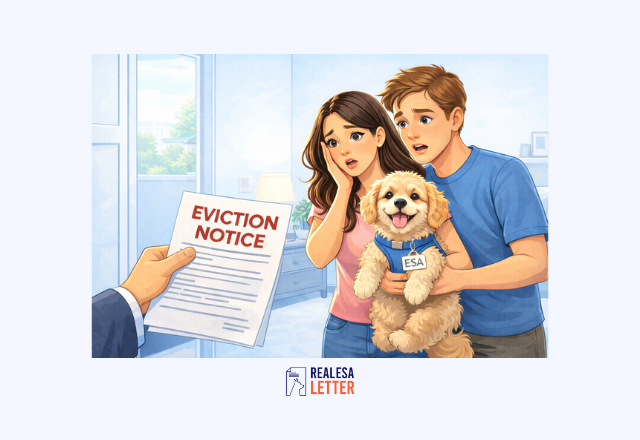
However, tenants can still face eviction for animal-related behavior, invalid documentation, or other lease violations.
This guide covers exactly when eviction is legal, which housing types are exempt, how state rules differ, and how to protect yourself if a dispute starts.
An ESA letter from RealESALetter.com provides the FHA-compliant documentation landlords are legally required to accept before pursuing an eviction over it.
Key Takeaways
Eviction Isn't Automatic: Having an ESA doesn't shield a tenant from eviction over the animal's behavior. A landlord can still evict for property damage, safety threats, or unrelated lease violations.
Fraud Voids Protection: A fake or invalid ESA letter strips the animal of its protected status. The landlord can then treat it as an unauthorized pet.
Some Housing Is Exempt: Owner-occupied buildings with four or fewer units don't have to accommodate an ESA. This is known as the Mrs. Murphy exemption.
Reasons Having an ESA Doesn't Protect You From Eviction
There are multiple reasons where an ESA cannot protect you from eviction. Read the reasons listed below.
Property Damage
Property damage beyond normal wear and tear is valid grounds for eviction regardless of ESA status. A landlord can pursue standard damage remedies, including eviction, the same way they would for any other tenant.
Safety Threats to Other Tenants
An ESA that bites, attacks, or repeatedly threatens another tenant's safety is valid grounds for eviction. The Fair Housing Act does not require a landlord to accommodate an animal that creates a direct threat.
Severe Noise or Nuisance Complaints
Constant barking, howling, or unresolved noise complaints can lead to eviction under standard lease terms. Every tenant, including neighbors, retains a right to quiet enjoyment of their unit.
Missing or Invalid Documentation
A landlord can treat an ESA as an unauthorized pet if the tenant never provided valid documentation. It is important to understand the ESA letter requirements to avoid landlord refusal.
Failure to Disclose Before Move-In
Bringing an ESA into a no-pet property without disclosing it first can temporarily count as a lease violation. If you're adding an ESA after your lease has already started, explore our guide on getting an ESA after you move in.
These grounds exist because Fair Housing Act protection covers the right to request an accommodation, not immunity from the consequences of how the animal behaves once it's approved.
Most of these situations are avoidable if you get an ESA letter from a licensed provider and keep your animal within basic lease expectations.
Standard Eviction Grounds That Have Nothing to Do With Your ESA
A landlord can still evict a tenant with an ESA for other valid lease violations or non-renewal. None of these grounds relate to the animal at all, they apply to any tenant, with or without an ESA.
Non-Payment or Late Rent
Falling behind on rent is grounds for eviction regardless of what animal lives in the unit.
Illegal Activity on the Property
Illegal activity on the premises is standard grounds for eviction and has nothing to do with ESA status.
Property Damage Caused by Humans
Damage caused by the tenant or a guest is treated the same as any other lease violation, separate from anything the animal did.
Lease Non-Renewal
A landlord can decline to renew a lease for legitimate business reasons unrelated to the ESA.
Housing Types Where ESA Protections Don't Apply
Federal fair housing law exempts certain housing types from ESA accommodation requirements entirely.
Such housing types are mentioned below:
Owner-Occupied Buildings With Four or Fewer Units
An owner living in a building with four or fewer units isn't required to accommodate an ESA under the Fair Housing Act's owner-occupied exemption, often called the Mrs. Murphy exemption.
Single-Family Homes Rented Without a Broker
A single-family home rented directly by an owner who owns fewer than three such homes is also exempt from ESA accommodation rules under the same statute.
These exemptions are narrow, but they're absolute where they apply, the accommodation request itself can be denied outright.
Fake ESA Letters Can Get You Evicted
A landlord can evict a tenant over an ESA if the letter is fraudulent or wasn't issued by a licensed mental health professional. Once a letter fails that test, the animal loses its protected status entirely.
What Makes an ESA Letter Fraudulent
A letter is fraudulent if it wasn't issued by a licensed professional, was purchased from an online registry, or misrepresents the tenant's condition. Understanding what an ESA letter actually is can help you avoid fraud and scams tied to fake documentation.
How Landlords Verify a Letter's Legitimacy
Landlords can verify a letter by confirming the clinician's license number and contacting them directly. Comparing the document against what a real ESA letter looks like makes a forged or incomplete letter much easier to spot.
Every RealESALetter.com letter includes the clinician's state license number and direct contact information, so a landlord can verify a tenant's documentation before pursuing an eviction over it.
What Happens If Your Letter Is Rejected as Fraudulent
A rejected or fraudulent letter means the animal is treated as an unauthorized pet, which can lead to standard no-pet eviction proceedings.
How ESA Eviction Disputes Usually Play Out
Whether an ESA eviction dispute ends in eviction usually comes down to one factor: how quickly the tenant responds with documentation.
When Disputes Resolve Without Eviction
A dispute typically resolves without eviction when the tenant supplies a valid letter and a written response as soon as the landlord raises a concern. Landlords are far less likely to pursue a formal filing once they have documentation confirming the accommodation is legitimate.
When Disputes Escalate to Eviction
A dispute typically escalates to a formal eviction filing when the tenant ignores a notice or can't produce documentation on request. Silence or delay gives the landlord grounds to treat the animal as an unauthorized pet rather than a protected accommodation.
How to Protect Yourself From a Wrongful ESA Eviction
Responding quickly with documentation is the most effective way to stop a wrongful ESA eviction before it escalates.
Here are some tips that can help you avoid wrongful eviction.
Document Everything in Writing
Keep every notice, email, and text with your landlord in writing to build a clear record of what was said and when.
Respond to Notices Before Deadlines Pass
Missing a written response deadline can forfeit your right to contest an eviction notice, even a wrongful one.
File a Complaint for Discriminatory Eviction
A tenant who believes an eviction is discriminatory can file a complaint with HUD's Office of Fair Housing and Equal Opportunity or at their state agency enforcing housing protection laws.
Conclusion
Having an ESA gives you real legal protection, but it isn't a shield against every lease violation. The strongest defense against a wrongful eviction is starting with a letter a landlord can't legitimately dispute. If you don't have one yet, you can get your ESA letter here and have documentation in hand before any dispute begins.
Frequently Asked Questions
Can a landlord evict you for having an ESA that isn't a dog or cat?

Yes, if the request is unreasonable. The Fair Housing Act covers any species, but an atypical animal, a large reptile, an exotic species, or livestock can still be denied or later become grounds for eviction if it poses a documented safety, health, or ordinance conflict a dog or cat wouldn't.
Can I be evicted if my ESA dog barks occasionally?
Occasional barking does not provide legal grounds for tenant eviction. Federal housing frameworks protect reasonable animal behavior, recognizing that domestic dogs cannot remain entirely silent. Eviction becomes a valid threat only if the barking escalates into a chronic, documented breach of local noise ordinances.
Can a landlord evict you for having more than one emotional support animal?
No. Landlords cannot evict you solely for having multiple emotional support animals if each animal is properly documented. Federal guidelines allow tenants to house multiple assistance animals under a single roof. However, your clinician must explicitly justify the unique therapeutic purpose that each individual animal serves for your mental health.
Can you be evicted for an ESA under a month-to-month lease?
Yes, but not solely because of the ESA. A landlord can end a month-to-month tenancy for standard, non-discriminatory reasons with proper notice; the ESA alone isn't valid grounds unless it caused a lease violation.
Does an ESA protect you from a no-cause eviction?
No. In states allowing no-cause eviction with proper notice, an ESA adds no protection against it. Fair Housing Act protections apply to disability-based discrimination, not to a lawful no-cause termination.
Can active-duty military tenants be evicted for having an ESA?
The Servicemembers Civil Relief Act can delay or halt an eviction for active-duty tenants regardless of ESA status, but it doesn't override standard eviction grounds tied to lease violations the animal caused.
Can a landlord require renters insurance for an ESA to avoid eviction risk?
A landlord can require renters insurance as a standard lease term, but can't require ESA-specific insurance or a higher policy limit than tenants without animals, doing so violates the reasonable accommodation standard.
Dr. Avery Langston is a health and wellness writer with 12+ years of experience covering ESA rights, housing laws, and mental health. As a senior contributor for RealESALetter, she helps readers understand ESA regulations and legal protections.

Darren Rafel is a licensed clinical social worker with active LCSW licenses across 13 states, including California, New Jersey, Texas, Florida, and Arkansas. He conducts ESA evaluations with direct clinical experience using pet therapy as part of mental health treatment.

Don't worry. Your pet stays with you.
Housing law is on your side
- 1A few questions. That's your paperwork
- 2A licensed therapist reviews your case
- 3Official ESA letter, ready to send
Not accepted? Full refund, guaranteed