Sign In / Create Account
Can an Emotional Support Animal Help Depression?
Yes. An emotional support animal can ease depression symptoms like isolation and low motivation. An ESA for depression works best as one part of a treatment plan. It does not replace therapy or medication.

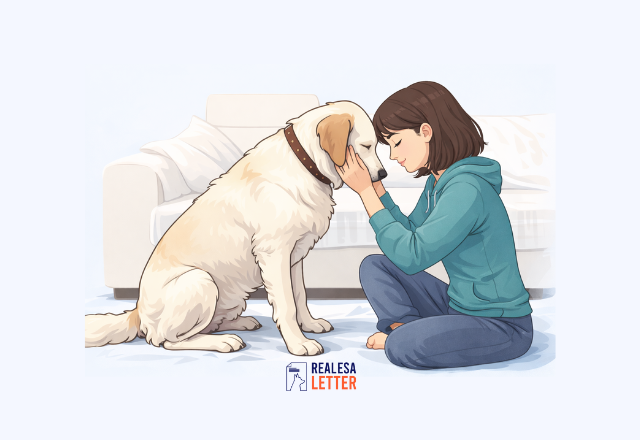
An ESA letter from RealESALetter.com lets people with depression ask their landlord to keep their emotional support animal.
This guide covers how an ESA helps and who qualifies. It also explains ESA rights in 2026.
Key Takeaways
An ESA Can Ease Depression: An emotional support animal can reduce isolation and add daily structure. It supports treatment but does not replace it.
Two Conditions Must Be Met: Depression must substantially limit a major life activity. The animal must ease at least one symptom.
A Clinician Makes the Call: Only a licensed mental health professional can issue an ESA letter. A diagnosis alone does not qualify you.
Housing Rules Changed in 2026: HUD rescinded its ESA guidance in May 2026. The Fair Housing Act statute still stands.
No Public Access or Cabin Rights: An ESA cannot enter stores or restaurants like a service dog. Airlines treat an ESA as a regular pet.
How Does an Emotional Support Animal Help With Depression?
An emotional support animal helps with depression by easing isolation and adding daily structure. Depression drains energy and pulls people away from others. An animal offers steady company each day.
Eases Isolation
An emotional support animal eases isolation by offering constant company without judgment. This can soften loneliness during withdrawn periods.
Adds Daily Structure
An emotional support animal adds structure because it needs care every day. Feeding and grooming give shape to empty days.
Encourages Movement
A dog encourages movement through regular walks. Light activity can lift mood and energy.
Supports a Steady Sleep Rhythm
Caring for a pet at set times can steady your sleep rhythm. Morning feeding gives you a reason to get up.
Provides Grounding Touch
Petting an animal grounds you in the present moment. It can interrupt spirals of negative thought.
A licensed clinician decides if an animal belongs in your care plan. Many people take that step through an ESA letter online evaluation.
What Does Research Say About ESAs and Depression?
Research suggests animal companionship can ease loneliness and stress in people with depression. The evidence is promising. It is also still limited.
A 2018 systematic review in BMC Psychiatry looked at 17 studies on pets and mental health. People often described pets as a key source of support. The measured results were mixed. |
A University of Toledo pilot study tested emotional support animals directly. Eleven adults with serious mental illness each received a shelter dog or cat. Their depression and loneliness scores dropped over 12 months. The study was small and had no control group. |
Most studies on animals and depression are small. Few test emotional support animals directly. This is why a clinician should judge whether an ESA fits your needs.
Does Depression Qualify for an Emotional Support Animal?
Depression qualifies for an emotional support animal when a licensed clinician finds it limits a major life activity. A diagnosis alone is not enough.
Which Depressive Disorders Do Clinicians Evaluate?
Clinicians most often evaluate major depressive disorder and persistent depressive disorder. Both appear in the DSM-5-TR. This is the standard manual clinicians use for diagnosis.
Depression with a seasonal pattern can also be assessed. So can depression that begins during or after pregnancy. Bipolar depression follows a separate clinical review.
Depression is one of many conditions a clinician may consider. You can see the wider range in this guide to disabilities that qualify for an ESA.
What Is Functional Impairment in Depression?
Functional impairment means depression symptoms interfere with daily tasks like self-care and sleep. Common examples include:
- Trouble getting out of bed or starting the day
- Skipping meals or basic self-care
- Pulling away from friends and family
- Sleeping too much or too little
- Hopelessness that stalls daily tasks
The clinician then asks if an animal eases these limits. Loving a pet is not the same as clinical need.
RealESALetter.com clinicians evaluate depression against DSM-5-TR criteria and list their state license number on every letter so landlords can verify it.
Is an Emotional Support Animal Right for Your Depression?
An emotional support animal fits depression best when you can care for it on your hardest days. A pet that adds stress can work against recovery.
- Energy: Can you meet the animal's needs on low-energy days?
- Cost: Can you cover food and vet bills for many years?
- Space: Does your home suit the animal's size and needs?
- Backup: Who can help with care during a hard stretch?
Dogs suit people who need walks and firm routines. Cats need less daily care.
What Rights Does an Emotional Support Animal for Depression Have?
An emotional support animal for depression has limited housing rights and no public access rights. It also has no special air travel rights.
Housing Rights
The Fair Housing Act still applies to ESA requests but HUD no longer enforces complaints for untrained ESAs. Here is what changed.
- Before May 2026: HUD notices FHEO-2013-01 and FHEO-2020-01 treated ESAs as assistance animals. Landlords usually waived no-pet rules and pet fees.
- After May 2026: FHEO Assistant Secretary Craig W. Trainor rescinded both notices on May 22. HUD now enforces complaints only for trained animals.
- What still applies: The Fair Housing Act itself did not change. Many states also protect ESAs under their own laws.
You can still send your landlord a written accommodation request with your ESA letter.
Public Access Rights
An emotional support animal for depression has no public access rights under the ADA. The ADA covers only dogs trained to perform tasks. Stores and restaurants can refuse an ESA.
Some people with depression need an animal that performs trained tasks in public. A psychiatric service dog is the correct category in that case. This guide explains the differences between a psychiatric service dog and an ESA.
Air Travel Rights
An emotional support animal for depression has no special air travel rights. It flies as a regular pet. The Department of Transportation ended ESA cabin rules in 2021. Pet fees and carrier size limits apply. Only trained psychiatric service dogs keep free cabin access.
How Does the ESA Letter Process Work for Depression?
The ESA letter process for depression follows four steps from symptom review to a signed letter.
Step 1: Note How Depression Affects Your Daily Life
Start by noting how depression affects your sleep and daily tasks. Keep a short log for one to two weeks.
Step 2: Book an Evaluation With a Licensed Clinician
Book an evaluation with a licensed mental health professional in your state. This can be your own therapist or a licensed telehealth clinician.
Step 3: Discuss Your Symptoms and Daily Limits
The clinician asks about your symptoms and how they limit daily life. Share your log to give clear examples.
Every condition is judged against the same core standard. This guide explains how to qualify for an emotional support animal in more detail.
Step 4: Receive the Clinician's Decision and Letter
The clinician issues a signed ESA letter only when they find a qualifying need. A valid letter shows the clinician's license number and state of licensure. It also includes the issue date and the clinician's signature. The letter does not need to name your diagnosis.
Some states require a 30-day client relationship before a letter is issued. California and Arkansas are two examples.
Summing Up!
An ESA is worth considering if depression limits your daily life and you can care for an animal. The right animal can ease isolation on hard days. A licensed clinician can tell you if it fits your needs. You can start an ESA evaluation for depression to find out.
Frequently Asked Questions
Does a landlord see my depression diagnosis?

No. An ESA letter does not need to name your diagnosis. It confirms a disability-related need for the animal.
Do you need to be in therapy to get an ESA for depression?
No. Ongoing therapy is not required for an ESA evaluation.
Can you get an ESA for depression and anxiety?
Yes. One ESA letter can cover depression and anxiety together. Anxiety has its own signs and qualifying factors. This guide to an emotional support animal for anxiety covers them.
What is the best emotional support animal for depression?
The best emotional support animal for depression is one you can care for every day. The right fit depends on your energy and home. Dogs provide structure and encourage physical activity. Cats offer low-maintenance comfort and passive calming through purring. Rabbits and guinea pigs suit limited spaces and low-energy days.
Is an emotional support animal the same as a therapy animal?
No. A therapy animal visits many people in places like hospitals. An ESA supports only its owner at home.
Dr. Avery Langston is a health and wellness writer with 12+ years of experience covering ESA rights, housing laws, and mental health. As a senior contributor for RealESALetter, she helps readers understand ESA regulations and legal protections.

Tina Logan is a Licensed Marriage and Family Therapist with 20+ years of clinical experience and an active California Board of Behavioral Sciences license. She conducts ESA and psychiatric service dog evaluations for RealESALetter assessing whether an ESA or task-trained PSD is clinically appropriate.

Don't worry. Your pet stays with you.
Housing law is on your side
- 1A few questions. That's your paperwork
- 2A licensed therapist reviews your case
- 3Official ESA letter, ready to send
Not accepted? Full refund, guaranteed