Sign In / Create Account
What Is an ESA for Autism?
An ESA for autism is a pet that eases autism symptoms like sensory overload and anxiety at home. Autism can qualify when a licensed clinician confirms the animal helps with a specific symptom.

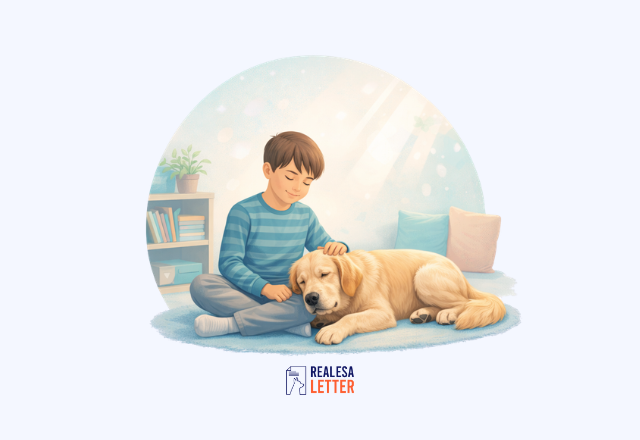
An ESA letter from RealESALetter.com supports a housing request to keep an autistic person's emotional support animal at home.
Autism is common in the United States. About 1 in 31 children aged 8 is identified with autism spectrum disorder according to CDC data.
This guide explains how clinicians evaluate autism. It also covers the rights an ESA has and when a service dog fits better.
Key Takeaways
Autism can qualify: A licensed clinician must confirm the link between symptoms and the animal. A diagnosis alone is not enough.
Evaluation is specific: Clinicians look at sensory load and daily routines at home. They also check for co-occurring anxiety.
Housing rights stay under the FHA: HUD changed its ESA enforcement in 2026. Requests now get an individualized assessment.
Travel and public access are limited: Airlines can treat an ESA as a pet. An ESA has no public access rights under the ADA.
Does Autism Qualify for an Emotional Support Animal?
Yes. Autism spectrum disorder can qualify when it limits a major life activity and an animal eases a symptom. A licensed clinician makes that call after an evaluation.
The clinician documents the need in an ESA letter. A housing provider reviews that letter when you request an accommodation.
Three things must be true for autism to qualify:
- A diagnosed condition: Autism spectrum disorder is a recognized neurodevelopmental diagnosis.
- A functional limitation: Autism must limit a major life activity such as sleep or self-care.
- A clear benefit: The animal must ease a specific symptom such as sensory overload or anxiety.
A diagnosis alone does not qualify anyone. Autism is one of several disabilities that qualify for an ESA when symptoms limit daily life.
How Does an Emotional Support Animal Help With Autism?
An emotional support animal for autism helps by easing sensory overload and anxiety through calm and predictable contact.
The benefit comes from presence and routine. It does not come from trained tasks.
ESA Ease Sensory Overload
An ESA eases sensory overload by giving a steady and familiar touch. Stroking a calm animal during loud or bright moments can help a person settle faster.
Help With Autistic Meltdowns
A familiar animal offers a safe focus when emotions run high. Many families build the animal into a calm-down routine.
Support Daily Routine
An ESA supports routine through care tasks that happen at the same time each day. Feeding and walks create predictable anchors for people who rely on structure.
Improve Social Interaction
An animal offers connection without social pressure. It also gives an autistic child an easy topic to talk about with others.
Improve Sleep
A calm animal nearby can ease nighttime anxiety for some people. Stanford Medicine reports that sleep problems affect 50 to 80 percent of autistic people.
How Does a Clinician Evaluate Autism for an ESA Letter?
A clinician evaluates how autism symptoms affect daily life at home and whether an animal reduces them. The focus is your needs. It is not a check of your paperwork.
An existing autism diagnosis helps. The clinician still makes their own assessment during the consultation.
RealESALetter.com clinicians assess autism spectrum disorder against DSM-5 criteria and list their state license number on every letter for housing provider verification.
The core evaluation steps are the same for every condition. This guide on what clinicians assess in an ESA evaluation explains each one.
What Is an Autism Support Level?
An autism support level shows how much daily support a person needs. The DSM-5 describes three levels. Level 1 needs some support. Level 3 needs very substantial support. Your level helps the clinician understand how symptoms affect home life.
What Sensory Triggers Does a Clinician Ask About?
A clinician asks which sounds or sights cause overload at home. Noise and bright light are common triggers. Some people also react to certain textures. The answers show where an animal could help.
How Does Routine Disruption Affect the Evaluation?
Routine disruption matters because sudden change causes distress for many autistic people. The clinician asks how you cope when plans change. An animal with a fixed care schedule can add stability.
Do Co-Occurring Conditions Affect an ESA Evaluation?
Yes. Many autistic people also live with anxiety or depression. These conditions can strengthen the case for an ESA. Trauma symptoms are assessed the same way as an ESA evaluation for PTSD.
Steps to Obtain an ESA Letter for Autism
You get an ESA letter for autism in three steps.
Complete an Assessment
Answer questions about autism symptoms and daily life at home.
Attend a Live Consultation
A licensed clinician reviews your answers and evaluates your needs.
Receive a Signed Letter
The clinician signs a letter with their license details if you qualify.
Timing depends on your state. Some states require a 30-day clinical relationship before a letter can issue.
Want the full picture first? This overview of how to qualify for an emotional support animal covers every requirement.
What Rights Does an ESA for Autism Have?
An ESA for autism has housing protections but no guaranteed travel or public access rights. Housing is the main setting where federal law protects an ESA.
What Housing Rights Does an ESA for Autism Have?
An ESA for autism stays protected under the Fair Housing Act. The law still requires landlords to make reasonable accommodation for people with disabilities.
HUD changed how it enforces ESA requests in 2026. Requests now receive an individualized assessment aligned with ADA principles. Some states also add their own ESA protections.
A landlord can still deny some requests. Learn when a landlord can deny an ESA and how to respond.
Can an ESA for Autism Fly in the Airplane Cabin?
No. Airlines can treat an ESA as a regular pet under the 2021 DOT rule. Airlines no longer have to accept emotional support animals in the cabin. Pet fees and carrier size limits may apply.
A trained service dog keeps its cabin access. You can review the current rule on the U.S. Department of Transportation service animal page.
Can an ESA for Autism Go Into Public Places?
No. An ESA has no public access rights under the ADA. The ADA covers dogs trained to perform tasks for a person with a disability.
Stores and restaurants can still allow an ESA at their own discretion. The ADA service animal requirements explain which animals qualify.
Should an Autistic Person Get an ESA or a Service Dog?
Choose a service dog if the person needs trained tasks and an ESA if they need comfort at home. The right choice depends on safety needs and daily routines.
An autism service dog is trained for specific tasks. It can go with its handler in public. Training takes more time and costs more.
An ESA needs no task training. Its value comes from calm companionship at home.
Feature | ESA | Autism service dog |
Main role | Comfort at home | Trained tasks for a disability |
Task training | Not required | Required |
Housing protection | Yes under the FHA | Yes under the FHA |
Public access | No | Yes under the ADA |
Airline cabin access | No | Yes |
How you get one | Clinical evaluation and ESA letter | Specialized task training |
Some families with higher safety needs compare options first. This guide to autism service dog tasks shows what trained dogs can do. A clinician can also help you weigh both paths during an evaluation.
When Is an ESA Not a Good Fit for Autism?
An ESA is not a good fit when the animal itself adds sensory stress. The animal should calm the person. It should not become a new trigger.
Watch for these signs:
- Noise: Barking or squawking can overwhelm a person with sound sensitivity.
- Sudden movement: An energetic animal can startle someone who needs predictability.
- Touch and texture: Some autistic people dislike the feel of fur or feathers.
- Allergies: A household allergy can turn a calm pet into a health problem.
- Caregiver load: Daily animal care adds work for families who already manage a lot.
Match the animal's temperament to the person's sensory profile. A quiet cat may suit someone who avoids noise. A gentle dog may suit someone who enjoys active play.
Conclusion
An ESA can be the right fit when calm companionship eases autism symptoms at home. The decision starts with a licensed clinician's evaluation. That evaluation looks at sensory needs and daily routines. Start your ESA evaluation to see if an animal could help you.
Frequently Asked Questions
Can a Parent Get an ESA Letter for an Autistic Child?

Yes. A parent or guardian can request housing accommodation for an ESA that supports their autistic child. The clinician evaluates the child's needs. The parent or guardian on the lease usually makes the request.
Can an ESA Help a Nonverbal Autistic Person?
Yes. An ESA needs no spoken communication to offer comfort. Touch and predictable behavior can ease stress without language demands.
Can an Autistic Adult Living Alone Get an ESA?
Yes. An autistic adult can qualify through the same clinical evaluation. An ESA can add routine and reduce isolation for people who live alone.
Does an ESA Replace Autism Therapy?
No. An ESA adds comfort alongside other autism support. It does not replace therapies such as speech or occupational therapy.
Can an Autistic Person Have More Than One ESA?
Yes. Each animal must ease a symptom that a clinician confirms. A landlord can review each animal as a separate request.
Dr. Avery Langston is a health and wellness writer with 12+ years of experience covering ESA rights, housing laws, and mental health. As a senior contributor for RealESALetter, she helps readers understand ESA regulations and legal protections.

Tina Logan is a Licensed Marriage and Family Therapist with 20+ years of clinical experience and an active California Board of Behavioral Sciences license. She conducts ESA and psychiatric service dog evaluations for RealESALetter assessing whether an ESA or task-trained PSD is clinically appropriate.

Don't worry. Your pet stays with you.
Housing law is on your side
- 1A few questions. That's your paperwork
- 2A licensed therapist reviews your case
- 3Official ESA letter, ready to send
Not accepted? Full refund, guaranteed